Delicoius Malaysia Cuisine : Rambutan
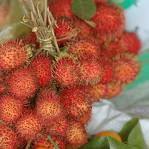
In the months of July and August, fruit stalls and door-to-door vendors in many South East Asian cities present an extra colourful picture. The reason is the bunches of a strange looking oval fruit with bright crimson or yellow skin covered with short fleshy hairs—rambutan—is in season, and plentiful. The word comes from the Malay, 'rambut' meaning hair. Inside is a narrow seed covered with semitransparent flesh which is crisp and mainly sweet. A lot depends on the variety, but it is obvious that the best varieties have been chosen for propagation and export.
The lychee is a distant relative of the akee. Lychee seed contain parts of hypoglycins like those found in the akee. They, and presumably the seed of near lychee relatives, are toxic and should never be consumed.
All of these fruit vary in quality, depending on cultivar and growing conditions. The quality is reflected by the price range observed at a Thailand market. The cheapest longans, from seedling trees, cab be one twentieth of the price asked for the best recognised cultivars.
To open rambutans and pulasans, partially cut through the skin, or just break open using a strong thumb-nail. Longans and lychees may be opened by tearing the skin at the stem end, squeezing the fruit at the lower end, and popping it into the mouth. "Experienced lychee eaters" bite lightly through the skin of the upper third of the fruit to obtain an opening in the skin and squeeze the fruit out and enjoy!Labels: Delicious Malaysia Cuisine
Malaysia Cuisine: Petai
 This is Petai
 Recipe that used petai : Sambal petai with prawn
Petai is a fetid jungle bean (the size and shape of a butter bean) that features prominently in
Malay cuisine; the beans come in long, flat pods and are harvested by pluckers who shinny up the bare trunks of tall petai trees - risky but rewarding work.
Some pictures of petai, a green bean used in Malay home cooking. It grows in long pods on a very large tree of the Legume family, Parkia speciosa. The beans are very pungent. I’ve most often seen it cooked in sambal tumis ikan bilis, a fried chili paste with dried anchovies. It is also eaten raw dipped in some kind of spicy sambal. A lot of vegetables in the diet are eaten raw with chili sauces instead of salad dressing, a practice known as ulam. I can eat petai on occassion, but mostly I just like the cool texture on the woody knobs that bear the pods (picture 2). Petai is believed to have a beneficial effect on the kidneys and urinary tract. I imagine this is due to the dark brown foul-smelling urine you will pass the day after a petai meal.
Petai is semi-wild; it is often encouraged to grow on the outskirts of kampungs. It is also gathered directly from the forest. In The Economic Valuation of Parkia speciosa in Peninsular Malaysia, Woo Weng Chuen estimates the domestic market at between RM8-24 million per year. Due to the whole smelly brown urine thing, though, I don’t think Petai has much future as an export crop, aside from supply to southeast asian communities in diaspora.
Labels: Delicious Malaysia Cuisine
Malaysia Cuisine: Lemang


Lemang is a traditional food cooked in a hollowed bamboo stick. Usually prepared for festivities such as Hari Raya Aidilfitri and Hari Raya Haji, lemang is made of glutinous rice and coconut milk, with salt added for taste. Some lemang recipes add corn. Lemang is usually eaten with rendang.
The main ingredient for Lemang is glutinous rice and coconut milk. While this may sound simple enough, preparing and cooking the tasty lemang takes quite a bit of effort. The glutinous rice is first washed and soaked in water for about 6 hours before it's strained and left to dry. Coconut milk is then mixed to the right measure with a dash of salt for taste. The mixture is then placed into hollow bamboo trunks lined with banana leaf. This natural and unique way of preparing lemang ensures the aroma is sealed in while it's cooked over slow open fire.
Labels: Delicious Malaysia Cuisine
 In the months of July and August, fruit stalls and door-to-door vendors in many South East Asian cities present an extra colourful picture. The reason is the bunches of a strange looking oval fruit with bright crimson or yellow skin covered with short fleshy hairs—rambutan—is in season, and plentiful. The word comes from the Malay, 'rambut' meaning hair. Inside is a narrow seed covered with semitransparent flesh which is crisp and mainly sweet. A lot depends on the variety, but it is obvious that the best varieties have been chosen for propagation and export.


